


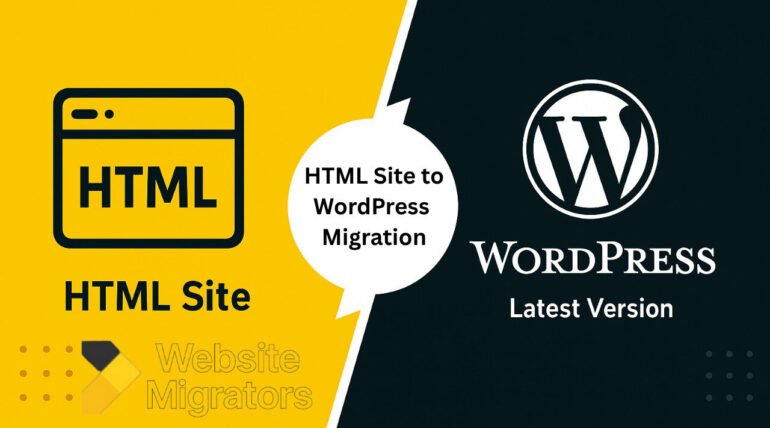
Thinking about moving your HTML site to WordPress? While static HTML websites are fast and simple, they lack flexibility, scalability, and ease of management. Updating content often requires editing code manually, which isn’t ideal for small businesses or eCommerce owners. By migrating to WordPress, you can take advantage of an intuitive dashboard, plugins, SEO tools, and WooCommerce integration to future-proof your website. In this guide, we’ll cover why WordPress is better, how to migrate step by step, common challenges, FAQs, and a final checklist for success.
Why Choose WordPress?
Static HTML websites may serve a basic purpose, but they cannot match the dynamic features of WordPress. Here are the biggest reasons why switching makes sense:
- Easy Updates: No more coding—edit pages and posts with a visual editor.
- SEO Tools: Plugins like Yoast SEO or RankMath make optimization simple.
- Customization: Access thousands of free and premium themes and plugins.
- Scalability: WordPress grows with your business needs.
Step-by-Step Migration Process
Here’s how to safely transfer your HTML site to WordPress:
- Choose Hosting: WordPress needs reliable hosting. We recommend Hostinger for speed and affordability.
- Install WordPress: Use one-click install via your hosting provider.
- Set Up Theme: Pick a WordPress theme that matches your current design or upgrade to a modern one.
- Copy Content: Manually copy text, images, and media from your HTML site into WordPress pages and posts.
- Recreate Navigation: Rebuild your menu structure for consistency.
- Redirect Old URLs: Use 301 redirects to make sure your old HTML links point to your new WordPress site.
- Install Plugins: Add essential tools for SEO, security, and backups.
- Test & Launch: Review everything on a staging site before going live.
Common Challenges & How to Avoid Them
- Design Differences: Old HTML templates won’t carry over—you’ll need to rebuild using a WordPress theme.
- SEO Risks: Without proper redirects, your rankings may suffer. Always set up 301 redirects.
- Manual Work: Unlike other CMS migrations, HTML content often requires manual transfer.
- Broken Links: Double-check all internal and external links after migration.
Pro Tips & Tools for Success
Make your migration from HTML to WordPress as smooth as possible with these tips:
- Start with a staging site before touching your live domain.
- Use an SEO plugin like RankMath to preserve rankings.
- Leverage import tools or hire a developer if your site is very large.
- Always back up your original HTML files before making changes.
- Host with a reliable provider such as Hostinger to ensure speed and uptime.
Final Checklist
✅ WordPress installed and configured
✅ Content transferred from HTML pages
✅ Theme customized and menus rebuilt
✅ Images and media added
✅ Redirects configured for SEO
✅ Plugins installed for security, SEO, and backups
Our CMS to WordPress Migration Services
We specialize in migrating websites from multiple platforms to WordPress. Explore our detailed migration guides and services:
- Blogger to WordPress Migration
- Drupal to WordPress Migration
- Joomla to WordPress Migration
- Squarespace to WordPress Migration
- SPIP to WordPress Migration
Frequently Asked Questions About HTML To WordPress
1. Why should I move my HTML site to WordPress?
Static HTML sites require coding knowledge for updates, while WordPress allows easy content management, SEO optimization, and eCommerce features.
2. Can I migrate my HTML design directly to WordPress?
No, but you can recreate your design using a custom WordPress theme or choose a modern template that enhances user experience.
3. Will I lose my SEO rankings after migration?
If you set up 301 redirects properly, your SEO should remain intact and may even improve with WordPress’s SEO tools.
4. How long does the migration take?
Small websites can be migrated in a few hours, while larger sites with dozens of pages may take several days.
5. Do I need hosting for WordPress?
Yes. Unlike static HTML sites, WordPress requires hosting. We recommend Hostinger for beginners and small businesses.
6. Can I set up an online store after migrating?
Yes! WordPress with WooCommerce lets you launch a fully functional online store.
Conclusion
Switching from HTML site to WordPress gives you flexibility, scalability, and better SEO tools. While the migration takes some manual effort, the long-term benefits are worth it. WordPress opens up endless possibilities for your business—whether it’s blogging, showcasing services, or running an online store.
If you’d prefer experts to handle your migration, we’re here to help. And don’t forget—choosing the right hosting provider is key. Hostinger is our top recommendation for secure and affordable WordPress hosting.
👉 Need help with your HTML to WordPress migration? Contact us here to get started today.